News
06-15-2026
How OOMT is helping the mobility industry work more safely with hazardous substances
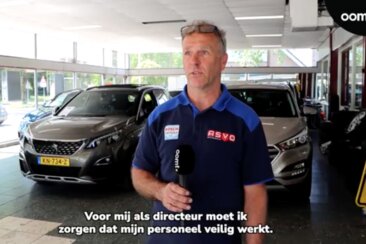
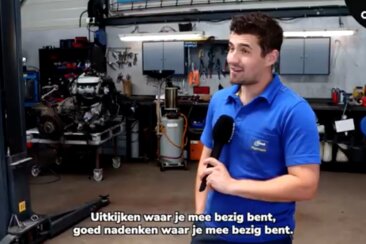
Every day, thousands of people in garages, workshops, and two-wheeler businesses work with hazardous substances. From brake cleaner to paint and degreaser. Employers are required to document which hazardous substances are used, what risks are involved, and how they protect their employees from those risks. But how do you do that if, as a business owner, you don't have specialist knowledge in this area? OOMT, the training and development fund for the mobility industry, worked with Chemrade Software to develop an industry tool that makes this work considerably easier: the Hazardous Substances Assistant.
Regulatory compliance takes a lot of time
Many companies in the mobility industry are small. An owner who works in the workshop themselves. A partner who handles the administration alongside everything else. Meanwhile, they still need to comply with extensive regulations around hazardous substances.
Emily van de Vijver sees this reality every day. On behalf of OOMT, she leads the industry-wide approach to hazardous substances. From her consultancy O2, she has worked on questions around safety, working conditions, and hazardous substances for fifteen years. "Especially in hands-on trades, people work with hazardous substances every day," says Emily. "So working safely simply has to be properly arranged. But in practice, that takes a lot of time, and the regulations are complex, especially when it comes to hazardous substances."
Setting up a substance register turns out to be a huge job for many companies. Employers have to register products, collect safety data sheets (SDS), and record substance information. "It's an incredible puzzle," says Emily. "Especially when you're also just trying to run a business." During the pilot, she saw firsthand how heavy this burden really is on top of day-to-day work. "One business owner from our advisory group was still filling in his register on New Year's Eve, just to see how it worked. The only time he had for it was during his holidays."
From Excel to automatically populated substance information
OOMT thoroughly researched which tool for registering hazardous substances would best fit the industry's day-to-day practice, with a strong focus on ease of use. "Can people work with this easily? And does it actually save them time? That was the key question for us. Only then would it actually get used."
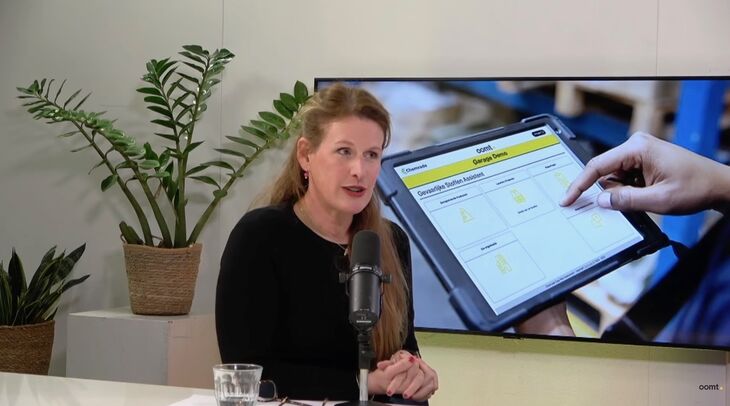
That search eventually led OOMT to Chemrade and the Hazardous Substances Assistant. A software platform that gives companies control over working with hazardous substances. The ease of use of the software, combined with the in-depth expertise of the Chemrade team, gave OOMT confidence. "They really know what they're talking about," says Emily. "Even when something specific comes up, or when things need to move quickly."
Companies build their own digital substance register, but they don't have to do it alone. Through an extensive product database, more than 5,000 SDS are already available, which makes entering data much easier. The tool automatically registers all the necessary information, such as components, properties, and risks. That saves a lot of manual searching and data entry. "It saves companies days, if not months, of work," says Emily.
'And ultimately, we're doing this for the people on the work floor. For mechanics, technicians, and skilled tradespeople who work with hazardous substances every day.'
More than 800 companies in four months
Since the industry tool launched on January 19, more than 800 companies have signed up within four months. According to Emily, the awareness campaign played an important role in this. OOMT actively supports business owners through webinars, a service desk, and practical guidance. In addition, students went out across the country on behalf of OOMT to visit companies in person, using short quizzes, flyers, and direct help with setting up an account.
"We wanted to make it as accessible as possible," says Emily. "Not waiting for people to come looking for it themselves, but literally going out to them." Notably, hardly any technical questions come in from users. The software is genuinely user-friendly and intuitive; for Emily, perhaps the strongest proof that the approach is working.
The next step: exposure and working safely
For OOMT and Chemrade, the work doesn't stop once a substance register is in place. The next step is about exposure and working safely in practice. "A register is just the beginning," says Emily. "After that, you want to know: under what conditions can substances be used safely? How do you limit exposure? And how do you make sure employees know how to work safely?"
The mobility sector ranges from small bicycle repair shops to large dealer groups with dozens of locations. Substances, applications, and working conditions vary enormously. That's exactly why OOMT is looking industry-wide for smart solutions that can be applied on a large scale. To do this, OOMT works together with other industry organizations, including Volandis and Wij Techniek, who also use the Chemrade platform. Together, they are building a shared product database for the various industries.
"And ultimately, we're doing this for the people on the work floor. For mechanics, technicians, and skilled tradespeople who work with hazardous substances every day. The better companies get a grip on risks and protection, the greater the health benefits will be in the long run."